I gave my "Finding Your Elusive Ancestors in the Census Haystack" presentation today at the San Diego Genealogical Society meeting. We had about 80 in attendance, and they mostly sat with rapt attention (I didn't see anybody nodding off) as I fought through my stack of 60 overheads to bring them pearls of wisdom and shovels of experience.
I did a little survey at the start: everyone had done census research, and most had done it with index books, Soundex cards and microfilm cranking - the "old way." About half had used online resources, but none of them had found "all" of their ancestors in the census.
My main thesis in this talk was that errors inevitably cropped up during the census enumeration and indexing processes - they were done by humans. Consequently, perhaps 15% to 25% of the people in each census were either not enumerated at all, were not enumerated correctly or were not indexed correctly. However, by applying "advanced search techniques" (using combinations of given name, last name, age, birthplace, etc., and using wild cards for the names) in the Ancestry and/or HQO census indexes, perhaps half of the "needles in the haystack" can be found.
I received some feedback from several attendees that they got some good ideas and encouragement for further research in Ancestry's census indexes and images.
One of the members attending had read my blog post from Friday about looking for data on Edward and Elizabeth Simes, and had found their cemetery records online and provided a printout to me at the break. Amazing. I was thankful - it had Elizabeth's maiden name on it!
The sound equipment at the SDGS venue (lavalier mike, receiver and sound board tweaking) is very touchy - it seemed like every time I wandered around in front of the audience that it would buzz a bit, so I tried to stay put and not give everybody an ear jolt. We had one of those when I first turned the mike on - ouch!
This may be the last presentation I do with overheads - I won't miss them! I should be able to use the laptop (my wife's birthday present!) early next year if the society has access to an LCD projector.
Saturday, November 11, 2006

Veterans Day - my heroes
On Veterans Day, we honor those who have served our country and have given their lives so that we can remain free.
My ancestors who have served in the military since the Revolutionary War include:
-----------------------------------------------------------------
1. World War II
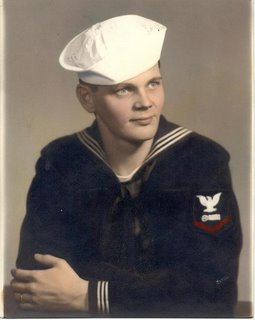
* Frederick W. Seaver (1911-1983, my father) served in the United States Navy aboard the USS Halford. The picture is from 1944.
He and my mother are buried at Fort Rosecrans National Cemetery in San Diego, on Point Loma overlooking the city and the Pacific Ocean.
--------------------------------
2. World War I
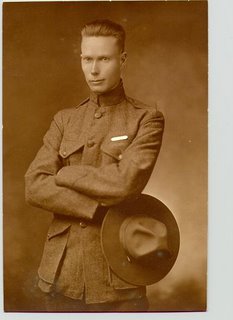
* Lyle L. Carringer (1891-1976, my grandfather) served in the United States Marines in San Diego. The picture is from 1917.
----------------------------------------------------------------
3. Civil War -- Isaac Seaver (1823-1901, my great-great-grandfather) of Leominster MA, a blacksmith, served in the Union Army.
-----------------------------------------------------------------
4. War of 1812
* James Bell (1777-1836) of Albany NY and later Henderson NY, served in the NY Militia.
* Amos Underhill (1772-1865) of Aurora NY served in the NY Militia.
-----------------------------------------------------------------
5. Revolutionary War
* Martin Carringer (1758-1835) of Mercer County PA (RW Pension file)
* Philip Row (1752-1817) of Hunterdon County NJ (RW Pension File)
* Peter Putman (1760-1835) of NJ and Yates County NY (RW Pension file)
* Stephen Feather (17??-1804) of NJ and Westmoreland county PA
* Rudolf spengler (1738-1811) of York County PA
* Philip Jacob King (1738-1792) of York County PA
* Burgess Metcalf (1741-1816) of Piermont NH
* Isaac Buck (1757-1846) of Sterling MA (RevWar Pension File)
* Thomas Dill (1755-1830) of Eastham MA (RW Pension File)
* Joseph Champlin (1758-1850) of S. Kingston RI (RW Pension File)
* Norman Seaver (1734-1787) of Westminster MA
* Benjamin Seaver (1757-1816) of Westminster MA
* Zachariah Hildreth (1728-1784) of Westford MA
* Zachariah Hildreth (1754-1828) of Townsend MA
* Amos Plimpton (1735-1808) of Medfield MA
* David Kirby (1740-1832) of Westport MA
* Joseph Oatley (1756-1815) of S. Kingston RI.
-----------------------------------------------------------------
I thank God for these men, the families that nurtured them, the wives that supported them, and the children who learned from them about the importance of service to their country.
May God continue to bless the United States of America.
My ancestors who have served in the military since the Revolutionary War include:
-----------------------------------------------------------------
1. World War II
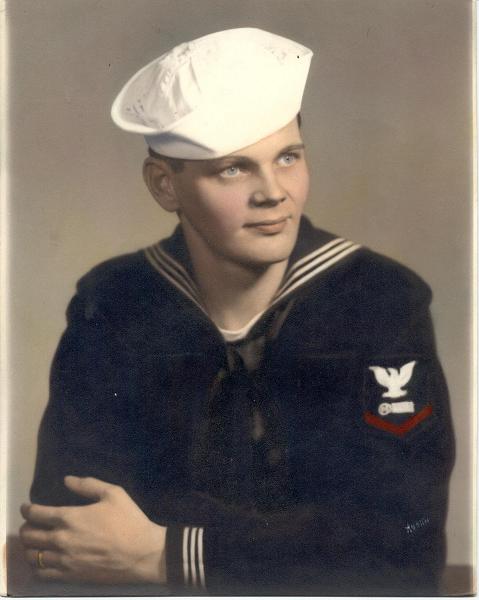
* Frederick W. Seaver (1911-1983, my father) served in the United States Navy aboard the USS Halford. The picture is from 1944.
He and my mother are buried at Fort Rosecrans National Cemetery in San Diego, on Point Loma overlooking the city and the Pacific Ocean.
--------------------------------
2. World War I
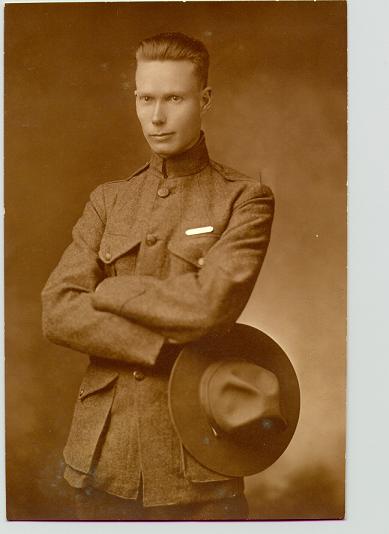
* Lyle L. Carringer (1891-1976, my grandfather) served in the United States Marines in San Diego. The picture is from 1917.
----------------------------------------------------------------
3. Civil War -- Isaac Seaver (1823-1901, my great-great-grandfather) of Leominster MA, a blacksmith, served in the Union Army.
-----------------------------------------------------------------
4. War of 1812
* James Bell (1777-1836) of Albany NY and later Henderson NY, served in the NY Militia.
* Amos Underhill (1772-1865) of Aurora NY served in the NY Militia.
-----------------------------------------------------------------
5. Revolutionary War
* Martin Carringer (1758-1835) of Mercer County PA (RW Pension file)
* Philip Row (1752-1817) of Hunterdon County NJ (RW Pension File)
* Peter Putman (1760-1835) of NJ and Yates County NY (RW Pension file)
* Stephen Feather (17??-1804) of NJ and Westmoreland county PA
* Rudolf spengler (1738-1811) of York County PA
* Philip Jacob King (1738-1792) of York County PA
* Burgess Metcalf (1741-1816) of Piermont NH
* Isaac Buck (1757-1846) of Sterling MA (RevWar Pension File)
* Thomas Dill (1755-1830) of Eastham MA (RW Pension File)
* Joseph Champlin (1758-1850) of S. Kingston RI (RW Pension File)
* Norman Seaver (1734-1787) of Westminster MA
* Benjamin Seaver (1757-1816) of Westminster MA
* Zachariah Hildreth (1728-1784) of Westford MA
* Zachariah Hildreth (1754-1828) of Townsend MA
* Amos Plimpton (1735-1808) of Medfield MA
* David Kirby (1740-1832) of Westport MA
* Joseph Oatley (1756-1815) of S. Kingston RI.
-----------------------------------------------------------------
I thank God for these men, the families that nurtured them, the wives that supported them, and the children who learned from them about the importance of service to their country.
May God continue to bless the United States of America.
Friday, November 10, 2006
The Adams Papers - fascinating!
Janice Farnsworth posted an excerpt from one of John Adams' diaries on the Massachusetts mailing list, and added a link for this particular diary #47 - http://www.masshist.org/digitaladams/aea/cfm/doc.cfm?id=D47.
It is fascinating - both in style and content. I had an enjoyable 15 minutes reading sections of his voyage in 1778 from Boston to France and his stay in France conducting state affairs.
The entire set of Adams Family Papers is at http://www.masshist.org/digitaladams/aea/, including his diaries, his autobiography and the letters between he and his wife, Abigail.
Isn't the Internet wonderful? Thanks to Janice for the link.
It is fascinating - both in style and content. I had an enjoyable 15 minutes reading sections of his voyage in 1778 from Boston to France and his stay in France conducting state affairs.
The entire set of Adams Family Papers is at http://www.masshist.org/digitaladams/aea/, including his diaries, his autobiography and the letters between he and his wife, Abigail.
Isn't the Internet wonderful? Thanks to Janice for the link.
"It's not all on the Internet" Revisited
I've spent most of the day at the FHC and at home researching some surnames for a friend of mine. The families include (all found in the census using Ancestry.com):
* Edward and Elizabeth (--?--) Simes - in Mower County MN in 1900, and Murray County MN in 1910
* Fred and Matilda (--?--) Baldwin - in Fillmore County MN in 1900, and Howard County IA in 1910
* --?-- and Lucretia (--?--) Baldwin - in Fillmore County MN in 1870 and Howard County IA in 1880.
I thought to myself "surely there will be some data online for at least one of these families." Well, my thought was erroneous. There is precious little data on these "salt of the earth" people!
I checked Google, the Rootsweb WorldConnect database, the LDS AF/PRF/IGI databases, the USGenWeb Archives, the USGenWeb sites for the counties, the Genforum and Ancestry message boards (surname and county boards), the Ancestry "One World Tree" database, and the Family Finder search at www.genealogy.com. There was one message board post asking for info on the Baldwin family in Howard County IA.
I didn't search the books on Heritage Quest or Ancestry, nor the other Ancestry databases. There may be some data on these families in those resources.
This is a pretty good example of the maxim that "It's not all on the Internet." Most of us understand this, and are happy to find something on the Internet for the families we are researching.
So, where are the records for these people? They are in the land and probate records in the courthouses, and in family files in the local or regional historical and genealogical societies.
When the LDS church gets their microfilms indexed and linked, then we will be able to find the records on the Internet. Until then we need to do research the old fashioned way - by going there, or by obtaining microfilm from the FHL, or by hiring a local researcher.
At least I was able to extend my friend's known ancestry another generation or two on surnames that he still doesn't know about. I hope that he will be surprised when I give him a genealogy report on Sunday.
* Edward and Elizabeth (--?--) Simes - in Mower County MN in 1900, and Murray County MN in 1910
* Fred and Matilda (--?--) Baldwin - in Fillmore County MN in 1900, and Howard County IA in 1910
* --?-- and Lucretia (--?--) Baldwin - in Fillmore County MN in 1870 and Howard County IA in 1880.
I thought to myself "surely there will be some data online for at least one of these families." Well, my thought was erroneous. There is precious little data on these "salt of the earth" people!
I checked Google, the Rootsweb WorldConnect database, the LDS AF/PRF/IGI databases, the USGenWeb Archives, the USGenWeb sites for the counties, the Genforum and Ancestry message boards (surname and county boards), the Ancestry "One World Tree" database, and the Family Finder search at www.genealogy.com. There was one message board post asking for info on the Baldwin family in Howard County IA.
I didn't search the books on Heritage Quest or Ancestry, nor the other Ancestry databases. There may be some data on these families in those resources.
This is a pretty good example of the maxim that "It's not all on the Internet." Most of us understand this, and are happy to find something on the Internet for the families we are researching.
So, where are the records for these people? They are in the land and probate records in the courthouses, and in family files in the local or regional historical and genealogical societies.
When the LDS church gets their microfilms indexed and linked, then we will be able to find the records on the Internet. Until then we need to do research the old fashioned way - by going there, or by obtaining microfilm from the FHL, or by hiring a local researcher.
At least I was able to extend my friend's known ancestry another generation or two on surnames that he still doesn't know about. I hope that he will be surprised when I give him a genealogy report on Sunday.
Randy to speak at San Diego Gen Society on Saturday
My friend Ken Aitken, on his Genealogy Education blog, says that speakers should advertise their talks at local societies, so ...
San Diego genies - here is your chance to meet the only San Diego area genea-blogger - ME - and hear my stirring presentation about
"Finding Your Elusive Ancestors in the Census Haystack."
The San Diego Genealogical Society meeting is Saturday, 11 November at 12 noon at St. Andrews Lutheran Church (8350 Lake Murray Blvd, San Diego, at Jackson Drive).
The publicity for the talk on the SDGS newsletter says:
"Have you found ALL of the census entries for your ancestors? If not, why not? - probably because they were not enumerated or indexed correctly - and they are lost in the haystack of millions of census entries. The chances of finding your elusive ancestors in the census has improved since the days of printed name indexes, Soundex card searches and microfilm cranking at the Archives or FHC.
"This presentation will briefly survey the available census records, discuss the census taking process, examine the change from microfilm to online access to the records, and describe methods to effectively search for your elusive ancvestors using online census indexes and images."
Hope you can make it - please mention this blog post if it convinced you to attend.
San Diego genies - here is your chance to meet the only San Diego area genea-blogger - ME - and hear my stirring presentation about
"Finding Your Elusive Ancestors in the Census Haystack."
The San Diego Genealogical Society meeting is Saturday, 11 November at 12 noon at St. Andrews Lutheran Church (8350 Lake Murray Blvd, San Diego, at Jackson Drive).
The publicity for the talk on the SDGS newsletter says:
"Have you found ALL of the census entries for your ancestors? If not, why not? - probably because they were not enumerated or indexed correctly - and they are lost in the haystack of millions of census entries. The chances of finding your elusive ancestors in the census has improved since the days of printed name indexes, Soundex card searches and microfilm cranking at the Archives or FHC.
"This presentation will briefly survey the available census records, discuss the census taking process, examine the change from microfilm to online access to the records, and describe methods to effectively search for your elusive ancvestors using online census indexes and images."
Hope you can make it - please mention this blog post if it convinced you to attend.
Thursday, November 9, 2006
Have you done your family health history?
One of the "Round Tuit" tasks I've not done is to make a Family Health History. Until now!
The "My Family Health Portrait" home page is at https://familyhistory.hhs.gov/. This is part of the U.S. Surgeon General's Family History Initiative. The web page says:
I created my family health history, as best I know it, and included my brothers, parents, grandparents, and aunts and uncles. The program permits nieces/nephews, half-siblings, cousins, etc. also.
You need to know something about each individual and their health history. If they are deceased, the program asks for the cause of death and their age at death. If they had one or more diseases (heart disease, stroke, diabetes, colon cancer, breast cancer and ovarian cancer are the default choices, and you can add more), the program asks for their age range when they incurred the disease.
After inputting all of the data for each person, the program draws a family tree chart showing each person in the database and notes the cause of death and incidence of each disease.
Finally, you can download the file to your computer hard drive and print it out on your printer using Adobe Reader. The web site says it does not keep your data online.
You can go back and edit individuals, and can go back later and add more or edit the information, using the file saved on your hard drive.
This was a program very user-friendly, and it will be useful to many people.
The "My Family Health Portrait" home page is at https://familyhistory.hhs.gov/. This is part of the U.S. Surgeon General's Family History Initiative. The web page says:
My Family Health Portrait allows you to create a personalized family health history report from any computer with an Internet connection and an up-to-date Web browser. Information you provide creates a drawing of your family tree and a chart of your family health history. Both the chart and the drawing can be printed and shared with your family members or your healthcare professional. Used in consultation with your healthcare professional, your family health history can help you review your family's health history and develop disease prevention strategies that are right for you.
New users can click on Create a Family History to begin creating a personalized family health history. Returning users can click on Load a Saved Family History to edit or update an existing personalized family health history.
I created my family health history, as best I know it, and included my brothers, parents, grandparents, and aunts and uncles. The program permits nieces/nephews, half-siblings, cousins, etc. also.
You need to know something about each individual and their health history. If they are deceased, the program asks for the cause of death and their age at death. If they had one or more diseases (heart disease, stroke, diabetes, colon cancer, breast cancer and ovarian cancer are the default choices, and you can add more), the program asks for their age range when they incurred the disease.
After inputting all of the data for each person, the program draws a family tree chart showing each person in the database and notes the cause of death and incidence of each disease.
Finally, you can download the file to your computer hard drive and print it out on your printer using Adobe Reader. The web site says it does not keep your data online.
You can go back and edit individuals, and can go back later and add more or edit the information, using the file saved on your hard drive.
This was a program very user-friendly, and it will be useful to many people.
Do you remember -- Taglines?
Do you remember when taglines on emails and even in personal letters were all the rage - like back in the early 1990's? I have a large collection of them in my humor archives.
However, I ran across another large set, and I don't remember seeing many of them before. Check out Joanne Todd Rabun's GenePool site for taglines at Rootsweb here.
Five of my favorites from this list are:
#11: Thou shalt not covet thy neighbor's genealogy!
Add to your genealogy the fun, easy way. Have grandchildren!
I used to have a life, then I started doing genealogy.
Try genealogy. You can't get fired and you can't quit!
I'm not stuck, I'm ancestrally challenged
How about you - got a favorite? Check out the other pages in Joanne's Gene Pool site. She has a nice collection of information and humor.
However, I ran across another large set, and I don't remember seeing many of them before. Check out Joanne Todd Rabun's GenePool site for taglines at Rootsweb here.
Five of my favorites from this list are:
#11: Thou shalt not covet thy neighbor's genealogy!
Add to your genealogy the fun, easy way. Have grandchildren!
I used to have a life, then I started doing genealogy.
Try genealogy. You can't get fired and you can't quit!
I'm not stuck, I'm ancestrally challenged
How about you - got a favorite? Check out the other pages in Joanne's Gene Pool site. She has a nice collection of information and humor.
World's largest gravestone
I may have missed this article written in March 2006 in the Hendersonville (NC) News titled "Larger Than Life, McCrary Twins Still Famous" found here.
The article notes that:
And the Guinness World Record for the largest gravestone commemorates the McCrary twins:
Read the whole article. Big boys... I'd never heard of the twins, of course, but the gravestone sounds impressive.
The article notes that:
Billy and Benny McCrary were larger than life, identical twins from Hendersonville who gained international fame as pro wrestlers, mini-bike stunt riders and world record holders.
At their peak, the McCrary twins cumulatively weighed 1,598 pounds; they still hold the world record as the heaviest twins. Their notoriety began when a Life magazine photographer snapped the 600-plus-pound twins riding mini-bikes at the Apple Festival.
And the Guinness World Record for the largest gravestone commemorates the McCrary twins:
Virginia McCrary is particularly proud of her boys' 13-foot-wide memorial in the Crab Creek Baptist Church Cemetery on Jeter Mountain Road, which holds the record as the world's largest gravestone. The 3-ton granite monument is inscribed with two Honda mini-bikes and the words, "World Record Holders."
"Benny's wife, Tammie, and I went down to Elberton, Ga., the granite capital of the world," Mrs. McCrary says. "Tammie was very artistic and she drew all the dimensions on a large sheet of paper. They brought it up from Elberton in a big truck, with a crane. It's amazing and if I hadn't been there to see it with my own eyes, it would've been hard to believe."
Read the whole article. Big boys... I'd never heard of the twins, of course, but the gravestone sounds impressive.
FREE Immigration data at Ancestry
Ancestry.com is offering FREE access to their Immigration Collection through November 30th. The link to the entry page is here.
The Ancestry collection just tripled in size, and now has over 100 million entries for passengers through over 100 ports.
I have very few immigrants in this time period - but I did find James Richman in 1855 and his wife Hannah and their children in 1856. It looks like James also came in 1853 and in 1889, which is new info to me.
If you haven't found your immigrants yet, you might look for them in the Ancestry collection. Don't forget to check all of the databases that come up for your name - they may not have come into the port you were told or you expect.
The Ancestry collection just tripled in size, and now has over 100 million entries for passengers through over 100 ports.
I have very few immigrants in this time period - but I did find James Richman in 1855 and his wife Hannah and their children in 1856. It looks like James also came in 1853 and in 1889, which is new info to me.
If you haven't found your immigrants yet, you might look for them in the Ancestry collection. Don't forget to check all of the databases that come up for your name - they may not have come into the port you were told or you expect.
Wednesday, November 8, 2006
Did your ancestor have an FBI file?
While reading Cyndi's List about Beginning Genealogy, I ran across the link to "How to Do Genealogical Research Using FBI Files." The link to Michael Ravnitzky's information on Yigal Rechtman's web page is here.
The first question and answer says:
Read the whole thing for cost, waiting time, and other information.
Have you checked your deceased 20th century ancestors who might have had a file? You might be surprised!
The first question and answer says:
Q.1: How to do Genealogical Research using FBI Files?
A.1: The FBI maintained files on millions of Americans and others from 1908 until the present. Many genealogical researchers have been reluctant to request a copy of a relative's FBI file for research purposes. Here's how to do just that: Just send a simple letter of request to the FBI. Contrary to popular belief, you don't need to have a fancy form or notarized letter. No, the FBI doesn't "start a file" on you when you ask for records that you are entitled to request. Send the letter to:
FBI Freedom of Information Act Unit
Records Resources Division
Federal Bureau of Investigation
9th & Pennsylvania Avenue N.W.
Washington, DC 20535 USA
The letter should include the full name or names of the person whose file you wish to receive, the date of birth, the date of death, the place of birth. Finally, you need to send a photocopy of proof of death. This can be ANY of the following: newspaper obituary, citation from Who Was Who in America, death certificate, biographical reference, encyclopedia or magazine article on the person, or your simple statement that the person was born over 110 years ago. If the latter is the case, then the FBI doesn't require written proof of death because they assume anyone over 110 is probably deceased. But you'll still need the birth date.
You may think: Why would I want the file if I already have the name and birthdate? Well, the FBI file, if there is one, may have all sorts of other data that will help you in your research.
Read the whole thing for cost, waiting time, and other information.
Have you checked your deceased 20th century ancestors who might have had a file? You might be surprised!
Subscribe to:
Posts (Atom)