Showing posts with label FHL/FHC. Show all posts

Thursday, January 12, 2023

A Blast From the Past -- The Visit to TGN (Ancestry) in January 2009 by Genealogy Communicators

Here is a genealogy memory article for one of my most interesting and memorable visits to Salt Lake City.

 It was a cool and breezy week in Salt Lake City in January 2009, but this semi-rookie genealogy communicator was honored by The Generations Network (now Ancestry.com) to be invited for the sharing of the status of Ancestry.com with 7 other communicators on a "Bloggers Day."  I also met a number of excellent genealogists who were gathered the same week for SLIG, and made several visits to the Family History Library to perform research.

I was looking through my "Memories" on Facebook today, and found the links to my Genea-Musings blog posts highlighting the five days of my visit.  Here they are for your reading pleasure.  

*  Day 1 in Salt Lake City

*  Day 2 in Salt Lake City - a Visit to TGN - Part 1

*  Day 2 in Salt Lake City - A Visit to TGN - Part 2

*  Day 2 in Salt Lake City - A Visit to TGN - Part 3

*  Day 3 in SLC - the TGN Dinner and FTM 2009

*  Day 3 in SLC - the Family History Library

*  Day 4 in SLC - a day of football, food and good company

*  Day 5 in SLC - Back to the FHL, and a treat

Diane Haddad of Family Tree Magazine took some photos at the TGN meetings, including this one of the "Communicators" group with several TGN leaders:

As you can see, this was an august group of Ancestry leaders and communicators.  Can you name all of them?  Please put your guesses in the comments.  I will identify all of them in a future comment.

This was my first real foray into the genealogy community as a 3-year-old blogger, and it was one of my very best experiences in Salt Lake City ever (I had been there twice before for FHL research, and went to RootsTech in-person and the FHL from 2011 to 2018, and 2020).

The Ancestry leaders were very open about what they did, how they did it, and what the future held for Ancestry.com, and encouraged the Bloggers to write about what they saw and heard.  Did all of their predictions come true?  

I may do more of these "Blast From the Past" posts in the future.

==============================================


Copyright (c) 2023, Randall J. Seaver

Please comment on this post on the website by clicking the URL above and then the "Comments" link at the bottom of each post.  Share it on Twitter, Facebook, or Pinterest using the icons below.  Or contact me by email at randy.seaver@gmail.com.

Saturday, July 16, 2022

Saturday Night Genealogy Fun - Your Plans To Travel For Onsite Genealogy Research

  It's Saturday Night - 

time for more Genealogy Fun! 


Your mission, should you decide to accept it (cue the Mission Impossible music here) is to:

1)  Do you have plans to travel to do onsite genealogy research?  [Thank you to Linda Stufflebean for suggesting topics!]

2)  Write your own blog post, or add your response as a comment to this blog post, in a Facebook Status post or note.

Here's mine:

I don't have many plans to travel to do onsite genealogy research.  I'm almost 79, recovering from a heart attack and heart surgery, have a genealogy cave full of useful data, but still have some mysteries in my ancestry.  

Where would I go?  Salt Lake City is an obvious choice, but now I can visit a local Family History Center and see on digital microfilm almost everything I could find at the Family History Library.  I would love to go to New England and visit ancestral home sites and see what I could find for some of my ancestors at NEHGS.  I would love to go to England again and visit Wiltshire and Somerset and try to solve my ongoing mysteries there by finding records that are not yet digitized.

I do plan to go to the San Diego Family History Center in Mission Valley at some time to find more records that are on the restricted (to FHL/FHC access) list of digital microfilms.  

*  My first target would be the Hilperton Land Tax Assessment 1773-1886 records.  I have copied the records from 1773 to 1793 but I need to go all the way up to the 1850s in order to sort out my Richman, Rich, and Marshman ancestry - where did they live, when did they move, etc.  

*  There are also land records in Connecticut and Rhode Island to peruse at the San Diego Family History Center that are restricted from home use.  I made a list (I have it some place...) of these I want to check but now I can't find it - maybe I can look on my computer because I'm sure I typed it.  

Another task for onsite research is at the San Diego County Assessor's office to find land deeds for my Carringer and Auble ancestors.  A visit to the San Diego County Probate Court/library may provide additional probate records for my Carringer, Auble and Seaver ancestors.  

I doubt that I will attend any distant genealogy conference in the future.  I would love to see my geneablogger friends and vendor/supplier friends in person, but that's probably not going to happen unless I go to the SCGS Genealogy Jamboree in Burbank in future years.  

==============================================


Copyright (c) 2022, Randall J. Seaver

Please comment on this post on the website by clicking the URL above and then the "Comments" link at the bottom of each post.  Share it on Twitter, Facebook, or Pinterest using the icons below.  Or contact me by email at randy.seaver@gmail.com.

Monday, April 11, 2022

Lynn Turner Named New Director of the FamilySearch Family History Library

I received this information from FamilySearch today:

=====================================

 Lynn Turner Named New Director of the FamilySearch Family History Library

Lynn Turner, Director, FamilySearch Family History Library (2022)

SALT LAKE CITY, UTAH, 11 April 2022—FamilySearch announced that Lynn Turner is the new director of the FamilySearch Family History Library in Salt Lake City, Utah. He replaces David E. Rencher, who will continue as FamilySearch’s Chief Genealogical Officer. Turner was previously the assistant director of the Family History Library (FHL). He’s an Accredited Genealogist (AG®) in Spanish research. He will assume his new responsibilities immediately.

In 2004, Turner received his Bachelor of Arts in Genealogy and Family History from Brigham Young University and began his career at FamilySearch. As an intern, he began merging technology with genealogy, testing the scanning software being developed to digitize FamilySearch’s 2.4 million rolls of microfilms (See “FamilySearch Completes Digitization of Massive Microfilm Collection”). Shortly after his internship, Turner worked in FamilySearch Research Support, where he oversaw all outside correspondence for Spain and Latin America for the Family History Library. It was during this time that he and others began to develop the foundation of the FamilySearch Wiki, a rich genealogical resource guide online with other 100,000 articles.

Turner said it has been a privilege to work under Rencher’s tutelage for 3 years, and he’s excited to direct the library’s operations during these fascinating times of change in the family history industry. As the Assistant Director of the Family History Library, Turner managed new updates to patron workstations and customer service experiences—like the launch of free online genealogy consultations and new web pages for the library. He worked with FamilySearch software engineers to develop systems and processes to streamline microfilm scanning, third party keying, and the publication of millions of images and indexed records online. He also worked extensively with co-workers in Latin America and Spain to increase access to more records in these areas.

David Rencher Continues as FamilySearch Chief Genealogical Officer

“Lynn has been incredibly prepared to assume this role, both as a manager and as a genealogist,” said David E. Rencher, FamilySearch chief genealogical officer (CGO), and the previous library director. “I have the utmost confidence that the Family History Library is in great hands—a terrific management team with a very dedicated staff and service missionaries looking for opportunities to exercise all of the quality standards for our guests.”

Rencher was the library’s director from 1999–2002, and 2018–2022. When asked about passing on his role as the library’s director to Turner and focusing more on his CGO commitments, Rencher said, “Personally, it has been very gratifying at this stage of my career to have had the opportunity to oversee the changes in the guest experience and the upgrades to the library facilities. Who knew that we would be able to make such incredible improvements during the closure of the facility—something that would have taken much longer otherwise.” Rencher is excited to spend more time in his role as FamilySearch CGO with special projects like the 1950 US Census and working with genealogical societies.

Future Plans for the FamilySearch Family History Library

Looking to the future, Turner said the library team will continue to focus on making resources more available globally through technology. “We are now sharing knowledge and support virtually, making more and more books available online through the digital library. We will also continue to leverage technology to enhance our in-person experience. As the field of genealogy shifts, we will adapt to help people discover, gather, and connect with their ancestors,” said Turner.

The Family History Library serves hundreds of thousands of patrons per year from all over the world. Millions more frequent the 5,000+ family history centers worldwide or do online research daily at FamilySearch.org.

=========================================

Copyright (c) 2022, Randall J. Seaver

Please comment on this post on the website by clicking the URL above and then the "Comments" link at the bottom of each post. Share it on Twitter, Facebook, or Pinterest using the icons below. Or contact me by email at randy.seaver@gmail.com.

Thursday, December 30, 2021

FamilySearch 2021 Genealogy Highlights

I received this information from FamilySearch today:

==========================================

FamilySearch 2021 Genealogy Highlights

Major milestones include completion of massive microfilm digitization project and unparalleled RootsTech attendance
SALT LAKE CITY, UT—In 2021, FamilySearch completed the digitization of its massive microfilm collection—2.4 million rolls to be exact—and welcomed over 1 million people to its first all-virtual RootsTech Connect online event. FamilySearch International noted these and other 2021 achievements among its efforts to help create fun, free, family discoveries for individuals worldwide, and create the family tree of humankind.

FamilySearch Family Tree

Imagine billions of people making new family connections by sharing what they know about their family history to a free online family tree that ultimately constitutes the family tree of humankind. That is one long term goal of the FamilySearch Family Tree.

Crowdsourcing contributors worldwide added information about millions of deceased relatives to the FamilySearch Family Tree in 2021, making a total of 1.38 billion people now searchable in the world’s largest collaborative—and free—family tree!

Users also added hundreds of millions of sources—supporting facts—to their ancestors’ personal pages in the Family Tree. Sources can come from personal family records or hints generated by FamilySearch’s growing historical record collections. As the family tree of humankind grows, the number of ancestors that users have in common will also expand. Sources are important because they help strengthen the genealogical accuracy of ancestor pages—particularly for common, shared ancestors.

See what discoveries are waiting in the FamilySearch Family Tree for you. It’s free.

FamilySearch Searchable Records

To expand the branches of your family tree, you typically need access to genealogical records—documenting birth, marriage, death, census, military service, etc. FamilySearch now offers more than 14.3 billion searchable names and images from historical records from your ancestral homelands all over the globe. FamilySearch’s predecessors began gathering records in 1893 and started making these available on microfilm in 1938.

A major FamilySearch milestone in 2021 was the completion of the monumental task of digitizing its 2.4 million rolls of microfilm (See FamilySearch Completes Digitization of Massive Microfilm Collection). The initiative makes billions of ancestors from over 200 countries and principalities more readily discoverable online. FamilySearch’s Explore Historical Images feature enables users to effectively peruse digitized images from most of the microfilm collection online and more with a free FamilySearch account.

FamilySearch also added hundreds of millions of new, searchable, historical records in 2021. The top expansions included collections for Scandinavian countries (Norway, Denmark, Sweden, and Finland), the Netherlands, Spain, the Caribbean and Pacific Island countries, the United Kingdom, Canada, the United States, Mexico, Uruguay, Venezuela, Peru, and more.

Search these free collections to see what was added for your ancestral homelands in 2021 now using the enhanced search feature at FamilySearch.org.

FamilySearch Discovery Experiences

Global interest in personal family connections continues to grow. FamilySearch experienced over 200 million visits in 2021, with visitors combing through online ancestor records to extend their family tree and add family memories.

2021 enhancements that visitors can now enjoy include new discovery pages for ancestors in the family tree. These pages are an easy way to see your relative’s life story at a glance, view photos and stories, and understand the historical events they may have lived through.

It’s also easier than ever to see what FamilySearch can tell you about your relatives with the discovery search feature. This search allows you to see results from the Family Tree, historical records, memories and a surname search, all at the same time.

Finding Help with Family History

Need help with your family history? FamilySearch made wonderful enhancements to its menu of helpful services in 2021. You can now simply type in a topic or challenge, and suggested results will appear. The new FamilySearch Community forum enables you to easily find family history solutions and ask questions from—or even join—a helpful community of conscientious volunteers worldwide who are quick to respond—for free.

For those just getting started, FamilySearch also has a new page to guide you through your family history journey. From personal discoveries, to searching records, to creating a family tree or having family history fun, this page can get you started with simple steps.

Get started on your family history journey.

RootsTech Connect 2021 Highlights

RootsTech Connect welcomes millions of people worldwide to celebrate family and make family connections at the world’s largest family history conference and year-long learning platform. It offers thousands of classes, inspiring speakers, and meaningful activities that lead to fun family discoveries and foster new connections. Undaunted by the uncertainties surrounding COVID-19 and related travel restrictions, the 2021 event was held entirely online for the first time. The results were amazing and far reaching. The all-virtual RootsTech Connect 2021 attracted more than 1 million participants from 242 countries and territories (see RootsTech Attracts Over One Million Participants).

A key learning is attendees are as intensely interested in connecting with their living relatives as they are in discovering their ancestors. The stunning demand for the online event led Steve Rockwood, FamilySearch CEO, to declare online learning a new core FamilySearch priority. He said FamilySearch would continue to explore ways to effectively globalize and localize learning and discovery experiences.

Register now for RootsTech Connect 2022 (March 3–5, 2022). It’s free!

QUICK ROOTSTECH CONNECT 2021 LINKS
Family History Library Reopening

People from all over the world flock to Salt Lake City, Utah, every year to take advantage of the abundant genealogical resources of FamilySearch’s Family History Library. The library serves beginner and professional family history patrons from all over the world and is a popular tourist attraction for the state of Utah.

The library was happy to begin a phased reopening starting in July 2021 (See FamilySearch Family History Library Reopening), following its closure on March 13, 2020, due to the global COVID-19 pandemic. The Library took advantage of the prolonged closure to make needed renovations that will significantly improve patron discovery and research experiences. Enhancements include the addition of state-of-the-art patron workstations with dual monitors and adjustable height desks to accommodate sitting or standing preferences, enhanced workflow throughout the facility, a new patron dining area, and the addition of nearly 40,000 books from new acquisition and long-term storage.

The library also added or upgraded free patron services (Visit the new Family History Library web page). Guests can sign up for free, one-on-one virtual consultations with a research specialist (available in multiple languages). If you can’t come to the Library, a staff member can retrieve a book from its shelves or help you find what you’re seeking through the new record lookup service. In FamilySearch Communities online, guests can receive assistance from volunteers worldwide, including locating or interpreting ancestor records, asking questions, or sharing their expertise with others. The library also continued to expand its popular free online classes and webinars.

Find and share this announcement and additional images online in the FamilySearch Newsroom.

-----------------------------------------------------------------------

The URL for this post is:  https://www.geneamusings.com/2021/12/familysearch-2021-genealogy-highlights.html

Copyright (c) 2021, Randall J. Seaver

Please comment on this post on the website by clicking the URL above and then the "Comments" link at the bottom of each post. Share it on Twitter, Facebook, or Pinterest using the icons below. Or contact me by email at randy.seaver@gmail.com.

Tuesday, September 21, 2021

Wow! FamilySearch Completes Digitization of Massive Microfilm Collection

 I received this today from FamilySearch:

====================================

FamilySearch Completes Digitization of Massive Microfilm Collection

Effort makes billions of global genealogy records freely available online

A picture containing text, coffee, beverageDescription automatically generated


SALT LAKE CITY, UT—It is a milestone 83 years in the making. Today FamilySearch International announced the completion of a massive project to digitize its collection of millions of rolls of microfilm containing billions of family history records from around the world. The archive containing information on more than 11.5 billion individuals is now freely available to the public on FamilySearch.org.

"We hope that all those who contributed to this milestone in the last 80 years feel a sense of humble accomplishment today," said Steve Rockwood, the CEO of FamilySearch International. “And we hope the millions of individuals who will discover, gather, and connect generation upon generation of their family members for years to come because of these efforts will have a deep sense of gratitude for the many unheralded contributors who made those discoveries possible."

“It's a game-changer for everybody in the world. So, instead of having to come to the library, people can start accessing these records from home,” said Becky Adamson, a research specialist at the FamilySearch Family History Library in Salt Lake City, Utah.

Over 200 countries and principalities and more than 100 languages are represented in the digitized documents. Completion of the project makes it much easier for individuals to make more personal and family discoveries.

To explore FamilySearch’s free collections of indexed records and images, go to FamilySearch.org and search both “Records” and “Images”. The Images feature enables users to peruse digitized images from the microfilm collection and more. A free FamilySearch account will be required to access the service.

History of FamilySearch Records Preservation

FamilySearch and its predecessors have been collecting, preserving, and providing access to genealogically significant historical records for more than 100 years. Those records include birth, death, marriage, census, military service, immigration, and other types of documents.


FamilySearch began microfilming in 1938 as the Genealogical Society of Utah. It was one of the first major organizations to embrace the use of microfilm imaging. That microfilm collection eventually grew to more than 2.4 million rolls.

For many decades, duplicates of the original rolls could be ordered and viewed at one of FamilySearch’s more than 5,000 family history centers worldwide. The process of duplicating and distributing microfilm copies, and the laborious research that followed, seems excruciating by today’s instant online research standards, but at the time, it was innovative and the easiest, most economical way available to help patrons worldwide find family information without having to travel to an archive holding the original records.


FamilySearch ended its microfilm distribution to family history centers in September 2017 when it began its transition to an all-digital, free, online access approach. The microfilm collection will continue to be preserved, but the information the rolls contain can now be easily viewed and searched online.

FamilySearch continues to capture images of original records at an ever-increasing rate, howbeit in digital form, bypassing the need to transfer the information from film.

The Microfilm Digitization Timeline

Digitization of the rolls of film began more than 20 years ago when FamilySearch purchased its first microfilm scanners in 1998. The project was expected to take over 50 years to complete, but advances in technology helped shorten the timeline by nearly 30 years. The last of the microfilm scanning was completed this year. The project took a leap forward in 2006 when software and processes were developed by FamilySearch in conjunction with the Church History and the Information and Communication Services Departments of The Church of Jesus Christ of Latter-day Saints. The scanning began with about 5 employees. As the process was developed, up to 30 employees using 26 scanners were working on the process, even during the COVID-19 pandemic.

The digitization effort has been directed by the Church Historian and Recorder and executed by preservation professionals in the Church History Department. The last roll of film added to the collection was captured by FamilySearch’s in-field cameras in 2018.

FamilySearch is committed to collecting, preserving, and providing access to the world’s genealogical records to help individuals and families worldwide discover and connect with their family histories. FamilySearch will continue to increase the digitization of new records worldwide from its digital camera operations and partnerships. It will also begin digitizing 335,000 microfiches in its collections.

                                  =============================================


Copyright (c) 2021, Randall J. Seaver

Please comment on this post on the website by clicking the URL above and then the "Comments" link at the bottom of each post.  Share it on Twitter, Facebook,  or Pinterest using the icons below.  Or contact me by email at randy.seaver@gmail.com.

Tuesday, June 8, 2021

FamilySearch Family History Library Reopening 6 July 2021

 I received this from FamilySearch today:

===============================================


FamilySearch Family History Library Reopening

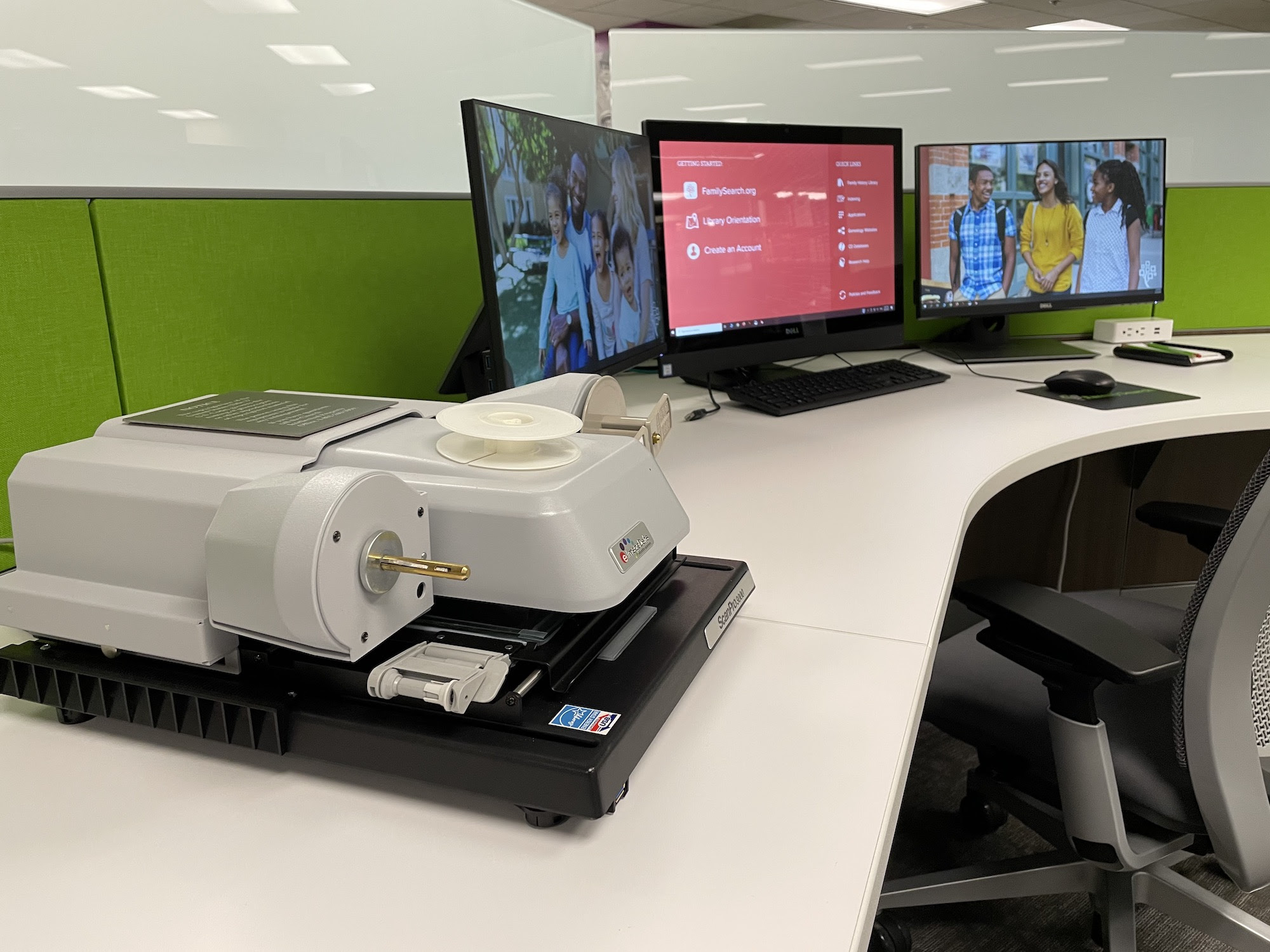
New patron film scanning station in the FamilySearch Family History LibrarySALT LAKE CITY, UT—The FamilySearch Family History Library in Salt Lake City, Utah, announced it will begin a phased reopening starting 6 July 2021. The popular destination service has been closed since March 13, 2020, due to precautions pertaining to the global COVID-19 pandemic. The library serves beginner and professional family history patrons from all over the world and is a popular tourist attraction for the state of Utah. Initially, hours will be from 9:00 a.m. to 5:00 p.m. Monday through Friday, with plans to extend to additional days and hours soon.  

“While billions of our records are available online, we realize that many researchers—including professional genealogists whose livelihoods depend on reliable records—are anxious to access records in-person within the library. We know the extended closing has created difficulties, and we are excited to welcome our guests back into a safe environment for continued research and discoveries,” said David Rencher, director of the Family History Library and FamilySearch’s Chief Genealogical Officer. 

Rencher says as one of the most popular attractions in the state, it has been tough to be closed for so long, but necessary to ensure the health and safety of staff and guests. When the library reopens, patrons will be asked to respect any prevailing safety precautions at that time. In addition, sanitizing stations are placed throughout the library, and continuous cleaning procedures will also be in place. 

New patron workstations at the FamilySearch Family History Library.The library has taken advantage of the prolonged closure to make needed renovations to the facility that will be very exciting to patrons when the doors reopen. “Guests will return to an environment that will significantly improve discovery and research experiences,” said Rencher. Crews have been busy preparing to welcome guests back by remodeling, adding new features like state-of-the-art patron workstations with multiple monitors and adjustable height desks to accommodate sitting or standing preferences, enhanced workflow throughout, and nearly 40,000 books from new acquisition and long-term storage. 

The library has added or upgraded the following new, free patron services. They are accessible through the new Family History Library web page.  

  • Guests can sign up for free, online, one-on-one virtual consultations with a research specialist (available in languages).  
  • Library look-up services. If you can’t come to the library, a staff member can retrieve a book from its shelves and help you find what you’re seeking. 
  • In FamilySearch Communities online, guests can get assistance from volunteers worldwide, including locating or interpreting ancestor records, asking questions, or sharing their expertise with others.  
  • Check out the growing menu of popular free online classes and webinars. New selections are offered and recorded weekly and made available on-demand.  
  • In the library, take advantage of improved services to digitize your family photos and artifacts or convert family audio and video tapes to digital media.  

FamilySearch family history centers and libraries will open based upon the direction of their local ecclesiastical leaders and government guidelines. If you plan to visit a FamilySearch center soon, please call ahead to ensure it is open and its hours of operation.

Find and share this announcement from the FamilySearch Newsroom.

                                  =============================================

The URL for this post is:  https://www.geneamusings.com/2021/06/familysearch-family-history-library.html

Copyright (c) 2021, Randall J. Seaver

Please comment on this post on the website by clicking the URL above and then the "Comments" link at the bottom of each post.  Share it on Twitter, Facebook,  or Pinterest using the icons below.  Or contact me by email at randy.seaver@gmail.com.

Tuesday, February 2, 2021

FamilySearch Family History Library Launches New Webpage

 I received this information from Familysearch over the weekend:

============================================

FamilySearch Family History Library Launches New Webpage


FamilySearch International is pleased to announce the launch of a new webpage for its brick-and-mortar flagship, the Family History Library, located in downtown Salt Lake City, Utah. The new Family History Library webpage is a part of FamilySearch.org and will provide new online patron experiences and up-to-date information on the library’s services and activities.

The new webpage enables guests to better access existing site services, such as visitor information, collections and hours of operations, and introduces many new and expanded services. For example, patrons worldwide can now schedule 20-minute appointments for free personal research consultations with a specialist. And book look-up services will be coming soon.

David Rencher, the chief genealogy officer for FamilySearch and director of the Family History Library, says this resource is just the beginning of plans for the library’s updated web presence. “Moving forward, we will build out the webpage to help our patrons’ and guests’ expanding needs with a global reach.”

The webpage is available in German, Spanish, French, Portuguese, and Chinese. Japanese and Italian languages will be added soon.

“The Family History Library offers the largest collection of genealogical materials in one place, making it a premier destination for family history resources and genealogical expertise,” added Rencher. “Its mission is constantly expanding to meet the evolving needs of guests throughout the world—and at no charge.”

Although the library itself is currently closed due to a global pandemic, it is now able to create more of its signature personalized discovery experiences online for patrons worldwide.

Free Online Consultations

Patrons can now schedule personal research consultations with the library’s genealogy experts in multiple languages, accommodating varying time zones worldwide. Personal consultations are conducted live online and are currently offered in Spanish, Mandarin Chinese, and English. More languages will be added.

Learning Center

In the new online learning center, hundreds of the library’s previously recorded how-to webinars are now available on-demand, along with other help tips and instructions based on your research needs.

Collections

The library currently has more than 340,000 genealogically unique books, 1.3 million microfilms, 190,000 microfiche, and a collection of 18,460 maps from around the world. While the goal is to make all library materials available to people throughout the world, some items and digital materials are contractually restricted and available only at the Family History Library.

During the pandemic, remodeling has continued at the library to improve visitor access to materials and services. The webpage includes descriptions of materials and collection information and images of the Library's new layout will be added as soon as the remodeling is completed.
Services

Record preservation is an essential part of the library’s mission. Guests have free access to equipment to scan books and records and convert audio and digital media to digital formats. The Discovery Center provides interactive activities for guests of all ages to learn about their heritage, a place to record stories, and more. Throughout the year, the library also provides in-person activities and heritage displays. When the Family History Library reopens, groups may register online for these activities and check for up-to-date calendars and schedules.

Family History Centers and Affiliate Libraries

FamilySearch owns and operates over 5,000 satellite branches of the Family History Library in 141 countries, called family history centers. In addition, it has over 1,100 affiliate libraries. FamilySearch digital content with limited access can often be viewed in these facilities, in addition to other specialized content helpful in each facility’s locale. Detailed information regarding this broader network and associated services will be added throughout 2021.

Find the new Family History Library webpage at FamilySearch.org/Family-History-Library.

================================================

The URL for this post is:  https://www.geneamusings.com/2021/02/familysearch-family-history-library.html


Copyright (c) 2021, Randall J. Seaver

Please comment on this post on the website by clicking the URL above and then the "Comments" link at the bottom of each post.  Share it on Twitter, Facebook, or Pinterest using the icons below.  Or contact me by email at randy.seaver@gmail.com.