Welcome to my genealogy blog. Genea-Musings features genealogy research tips and techniques, genealogy news items and commentary, genealogy humor, San Diego genealogy society news, family history research and some family history stories from the keyboard of Randy Seaver (of Chula Vista CA), who thinks that Genealogy Research Is really FUN! Copyright (c) Randall J. Seaver, 2006-2024.
Monday, November 10, 2008
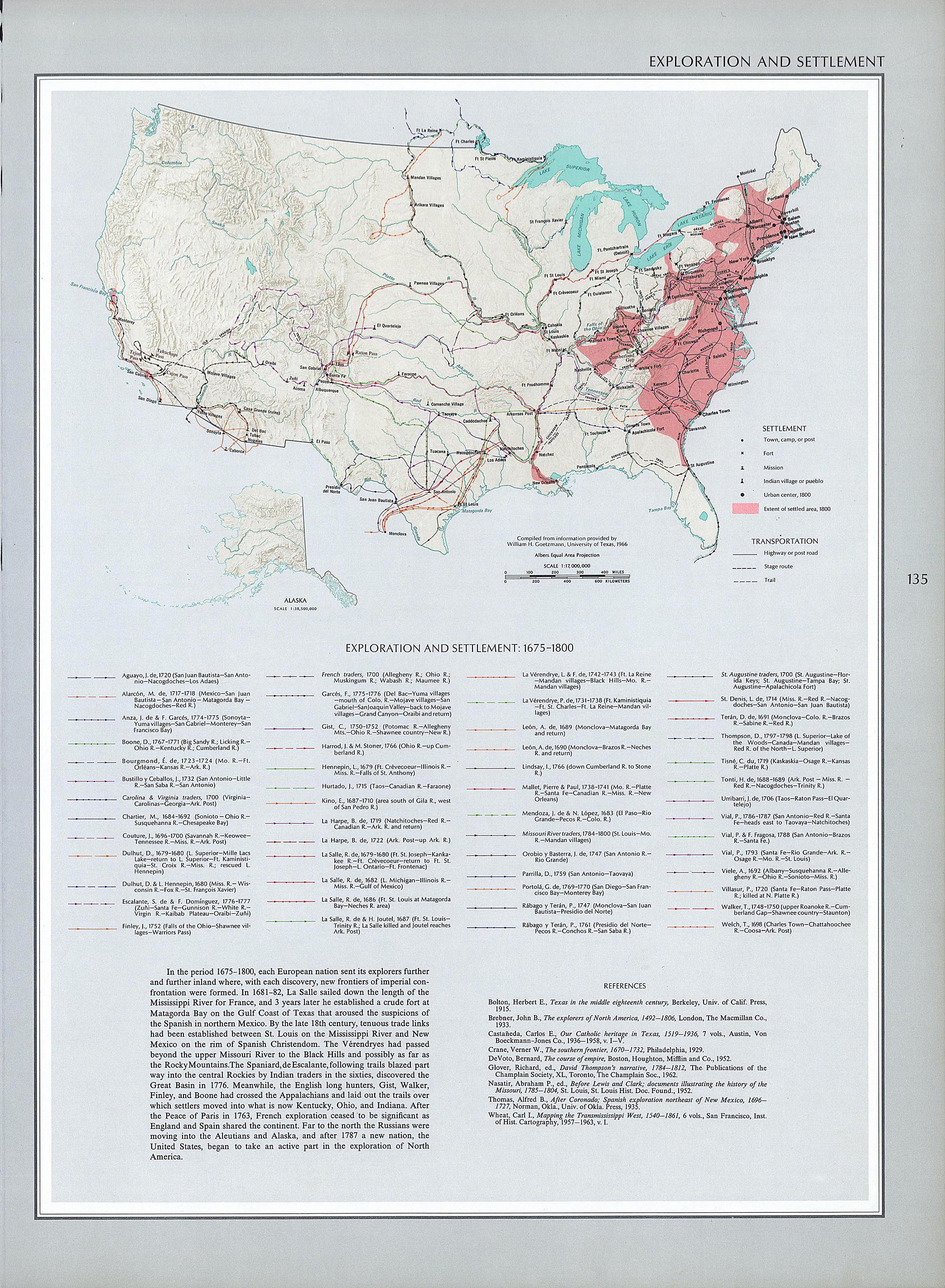
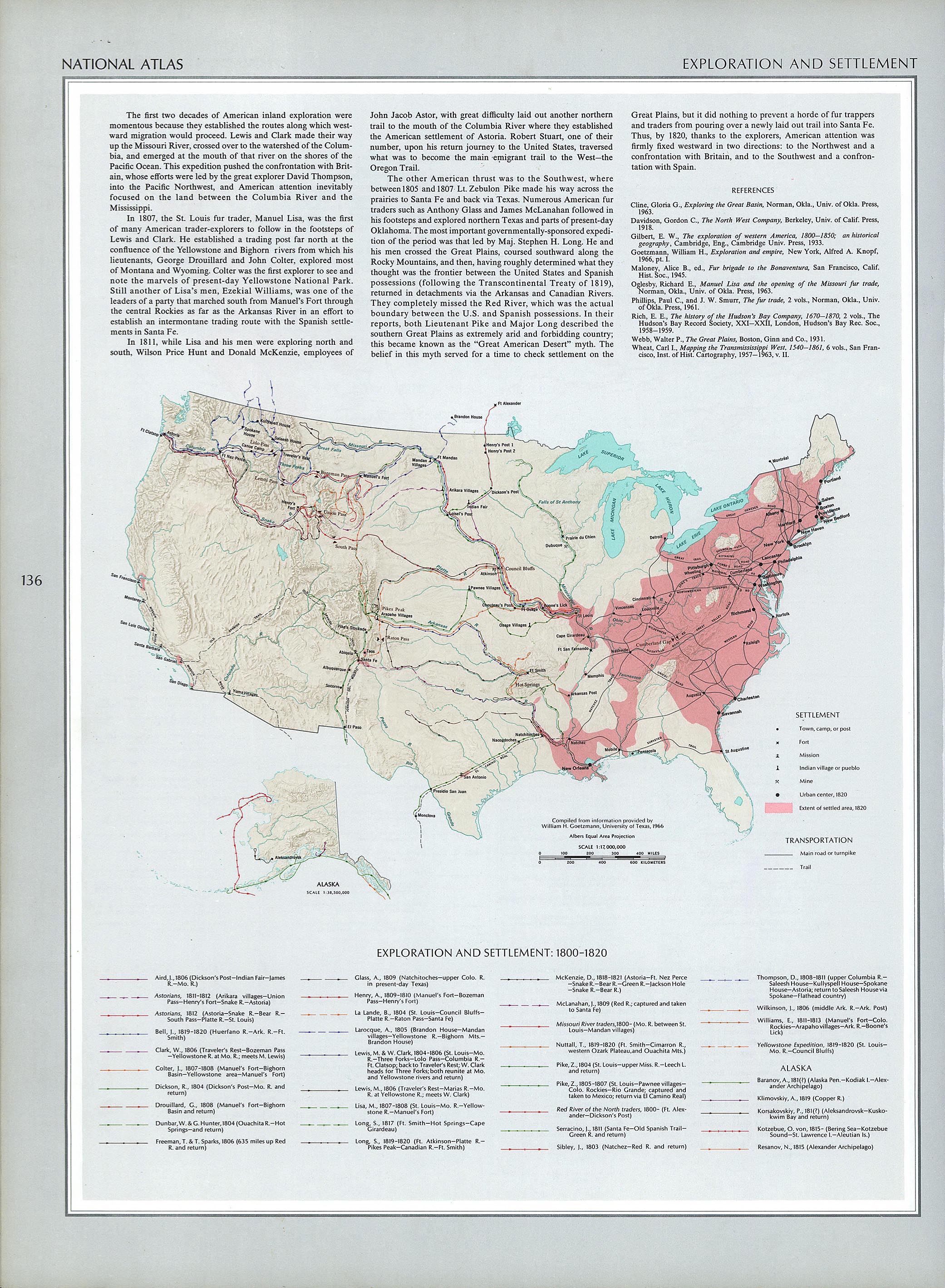
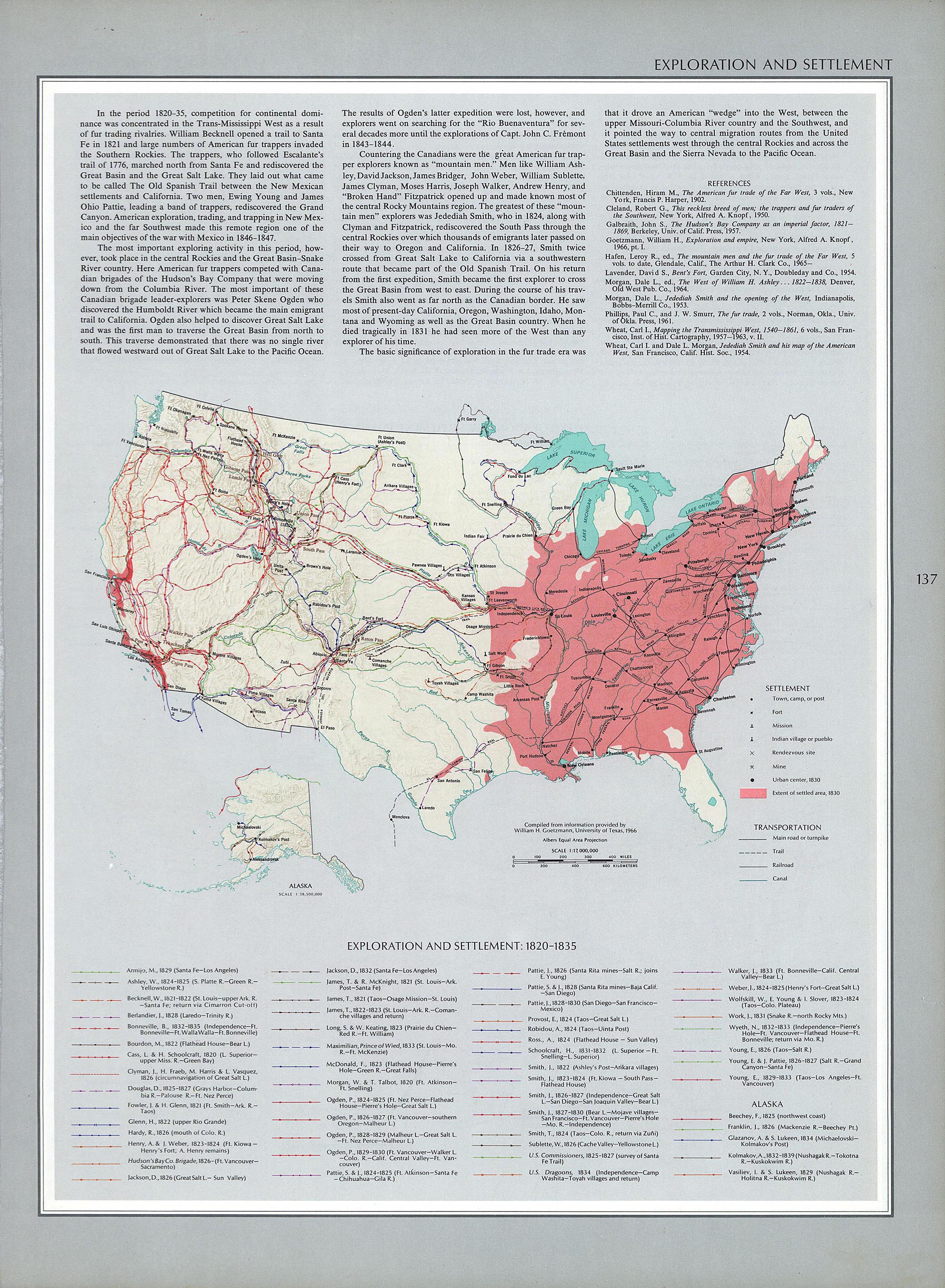
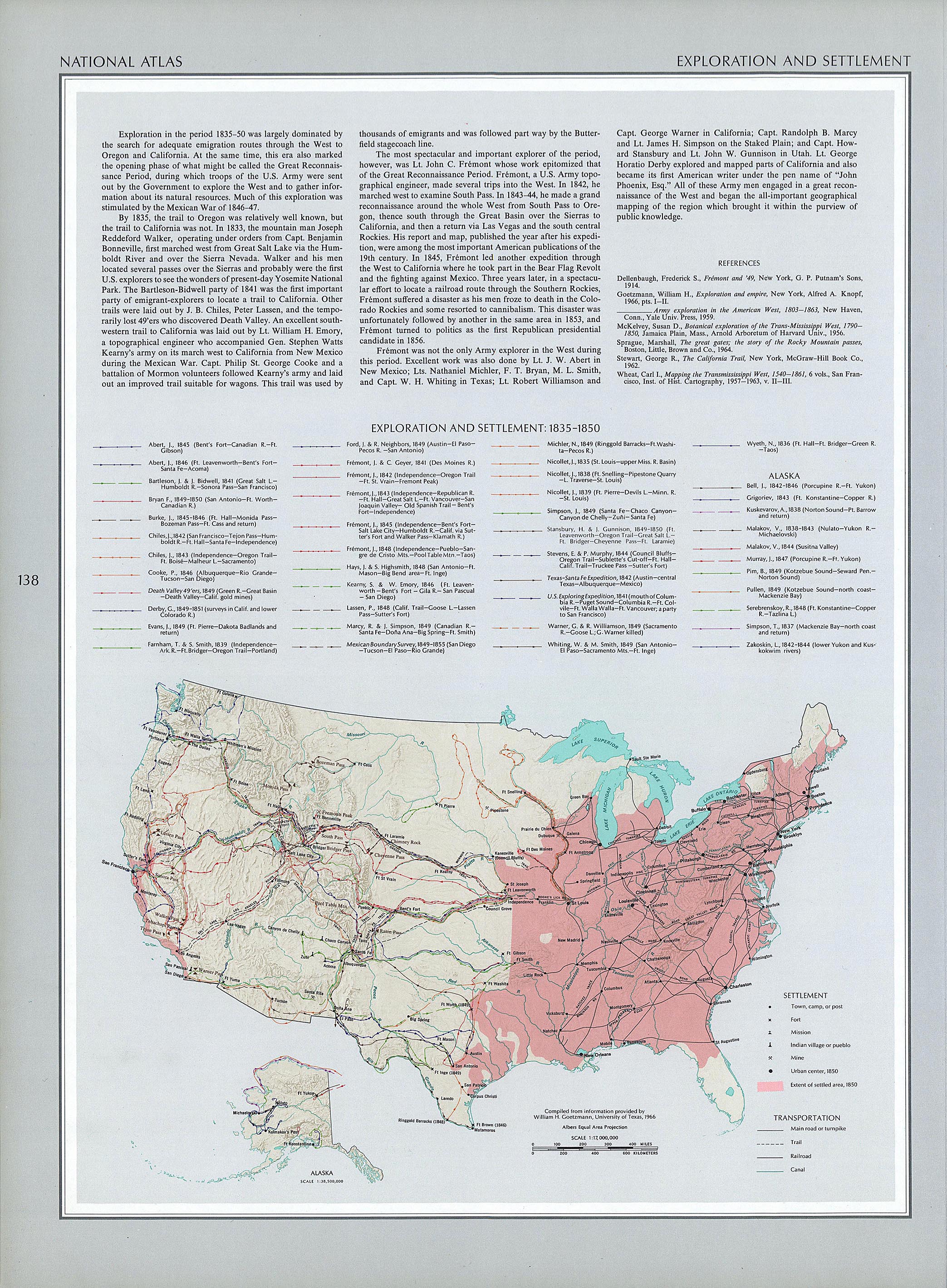
U.S. Exploration and Settlement Maps

How do you self-identify your ancestry?
Randy, I've found another interesting connection between the recent election and genealogy. Compare the following two maps and tell me what you see:
(look at the second slide, of which counties voted more Republican)http://graphics8.nytimes.com/packages/flash/politics/20081104_ELECTION_RECAP/electionChange2.swf
(look at those who chose "American" in response to their ancestry question)http://en.wikipedia.org/wiki/Image:Census-2000-Data-Top-US-Ancestries-by-County.svg
The second link is the real gem, for me and genealogists, of Drew's comment - the map below shows how United States residents responded to the question about their ancestry (I'm not sure of the exact wording) in the 2000 census. The map shows the highest percentage reported in each county:
Drew's point was that the areas of the country that voted in 2008 more for Republicans this time than in 2004 self-identified as "American" (the light yellow in the map), rather than as having ancestry from a specific country. We need to remember that the map shows only the highest percentage of responses, and that not everybody in each county identified as the highest percentage. In many cases, the highest percentage of respondents in a county might be less than 20%.
I also identify as "American" - how could I do otherwise? Of my 16 great-great-grandparents, 12 were born in the United States, two were born in Canada and two were born in England, but became American citizens. I understand, however, that very few non-genealogists even know the names of their great-great's, let alone their ancestry. My guess is that people recite racial or their surname origin when asked about ancestry.
What the map tells me is that many people retain an ethnic or national identity even after several generations of residence in the USA. Maybe that will "change" in the next century.
This Wikipedia page provides more information about the response to the ancestry question - it lists the percentage of responses to the racial, ethnic and ancestry questions in the 2000 census. However, some of the percentages stated are from later demographic studies. As I expected, the ancestry identification of European-Americans is broken up into smaller pieces, although they make up over 60% of the residents of the USA.
Thank you to Drew for finding these studies and pointing them out - there is a lot of demographic information available if we look for it!
Sunday, November 9, 2008
I Knew How the Election would go - because...
I'm sure that many of my readers have marveled, as I have, at the insights in this book. The basic tenets are (these are my summaries, based on charts in the book):
* The history of the English colonies and the United States can be defined by "generations" - groups defined as born between certain years, each generation encompassing 15 to 25 years in length.
* Each one of these generations has tendencies toward certain "peer personalities" - they call these personalities "Idealist," "Reactive," "Civic" and "Adaptive." The four generations cycle repeats in approximately 80 to 85 year periods.
* Two types of "social moments" occur in each 80-year cycle of the four personality types - a Secular Crisis (think Revolutionary War, Civil War, Great Depression) and a Spiritual Awakening (think Transcendental Idealism in the 1821-1839 time, Reform and Revivalism in 1886-1903, and the Sixties in 1967-1980 - the sexual revolution).
* As each generation moves through history, they take on attributes in approximately 20-year periods - for instance:
** The Adaptive personality type are suffocated in youth, conformist in Rising Adulthood, indecisive in Midlife and sensitive in Elderhood. These generations are the peacemakers, go along to get along, etc. The previous Adaptive Generation was called "Silent" (1925-1942) in the book, and the current Adaptive Generation doesn't have a name (born 2001-???) in the book.
** The Idealist personality types are indulged in Youth, narcissistic in Rising Adulthood, moralistic in Midlife and visionary in Elderhood. The current Idealist Generation, who tend to "think great things," is the "Boom" generation (born 1943-1960), which came of age during the 1960's and 1970's.
** The Reactive personality type are criticized in Youth, alienated in Rising Adulthood, pragmatic in Midlife and reclusive in Elderhood. The previous Reactive Generation, who tend to fix things, (1883-1900) was called the "Lost" Generation, and the current Reactive generation (born 1961-1981) is called the "13th" Generation in the book.
** The Civic personality type are protected in Youth, heroic in Rising Adulthood, powerful in Midlife, and busy in Elderhood. The Civic generations are those that do "great things" - the previous Civic generation was the GI generation born in 1901-1924 - the ones who fought in World War II and built American industry after the War, and the current Civic Generation are called "Millenial" (1981-2001?). There is great hope for the Millenials, of course.
I identify with the Adaptive personality type. However, I was born in 1943. My younger brothers are definitely Boomers, but I'm not, at least in personality type. Just call me "Mr. Sensitive," I guess.
Think about relationships between parents and children, and employees and managers, and you can understand why there are personality conflicts. It';s no wonder to me, that I identify so closely with my grandchildren who were all born after 2001, and are Adaptive types like me.
You have to read the 500-page book to get the full flavor of these theories and groupings, but they seemed persuasive to me at the time, and still do. Of course, not every person fits "neatly" into the "peer personality" type listed in the book, but it seems like the leaders of our country do fit.
One good example is Presidents:
* The "Lost" generation (Reactive) Presidents were Truman and Eisenhower
* The "GI" generation (Civic) Presidents were Kennedy, Johnson, Nixon, Ford, Carter, Reagan and Bush I.
* The "Silent" generation (Adaptive) Presidents were - none. Think Mondale, Dukakis, Dole, McCain in this generation. There have been Adaptive Presidents in US history - Andrew Jackson, Theodore Roosevelt and Woodrow Wilson are on the list.
* The "Boom" generation (Idealist) Presidents were Clinton and Bush II, and perhaps Obama. Or perhaps Obama is the first President from the "13th" generation, which is Reactive. It's too early to tell. What Obama accomplishes or how he governs may define his generation type.
Strauss and Howe make the point in the book that once the Presidency turns over to the next generation type, it doesn't go back. Clinton and Bush II are Idealist types, but McCain is a "Silent" generation Adaptive, and Obama is in a later generation type - either a "Boom" Idealist or a "13th" Reactive. So McCain, being an earlier type than already in office, really didn't have a chance, if the theory in the book is true.
I have tended to look at past, current and future history through this Generations lens. Strauss and Howe predicted events out into the 2060's in general terms.
When the 2008 Presidential nominees were McCain (an Adaptive) and Obama (an Idealist or Reactive type), I instinctively knew which one would win the latest election. I have no doubt that if the Democrats had nominated Hillary Clinton (a "Boom" Idealist), she also would have beaten McCain (an Adaptive). If the Republicans had nominated a "Boom" nominee like Huckabee, Romney or Giuliani, they might have won since the previous 16 years were "Boom" generation Presidents and there might not have been a generation-type turnover.
The book projects the next Secular Crisis in the 2010 to 2020 time period - we are close to that now. Will it be the current financial crisis (leading to depression or anarchy?) several years early? Or will it be a momentous political or cataclysmic event like a world (or nuclear) war or an asteroid strike? Nobody knows, but I'm not sure that I'm anxious to find out! And then in the 2040-2050 time there will be another spiritual awakening.
If you have the chance, buy the book or find it in a library and read it for the insight provided. They have published a sequel called The Fourth Turning which modifies some of the generation year ranges, and added more predictive material based on what has happened over the past 17 years since Generations was published.
How does this apply to genealogy research? Each of our colonial and American ancestors was born into one of these generations and probably had the typical "peer personality" of that generation. We may be able to correlate the typical "peer personality" with the life events of our ancestors, or perhaps be able to discern how they thought. The book has summaries of the historical events experienced by each of the generations.
What do you think? Do these theories have real purpose and validity? Do the "peer personality" descriptions fit your personality and outlook on life?
Best of the Genea-Blogs - will be back next week
Jasia has published the 59th Edition of the Carnival of Genealogy on her Creative Gene blog - the topic was Politics and Our Ancestors.
The Ancestry Insider has had a series of articles about visiting the National Archives in Washington DC and an article about the Ancestry vs. USGenWeb squabble and the resulting problems created.
Terry Thornton has been chasing posts from about 40 Graveyard Rabbits on his The Graveyard Rabbit blog.
footnoteMaven has posted several more of her weekly Friday from the Collectors articles on her Shades of the Departed blog from guest authors - November 7 was about Vintage Cameras - Time Machines by Rebecca Fenning from the web site Sense of Face.
I miss Leland Meitzler's Everton Publisher's Genealogy Blog, which has been missing for over two months now, and I miss DearMYRTLE's Genealogy Blog posts too (I think she moved...).
On the other hand, many of my genea-blogging colleagues have been busy writing and posting, and I have neglected to write them down. Note: I have to write them down - I have over 350 blogs on my Bloglines list - too many to check each week one-at-a-time..
The Best of the Genea-Blogs will return next Sunday - I promise!
Saturday, November 8, 2008
Oh Baby! Smile for the Camera
This father and grandfather has collected a lot of pictures, but finding pictures of each child and grandchild by him or herself was a challenge. I wanted to pick photos from when they were about one year old, so that they were still babies, but their facial and body features could be shown. I almost succeeded. Here is my proud father and grandpa's gallery of little darlings.
Leading off is my two daughters - Tami (born October 1976) and Lori (born May 1974), taken in May 1978:

SDGS Meeting Report - 8 November 2008
Pam's talk discussed the SDGS Library Dewey decimal catalog system, and the logic behind it, how to access the online library catalog from home to plan a library visit, and examples of the library catalog entries.
My talk was similar to the CGSSD class given in September, but jazzed up a bit with some cartoon slides. The presentation was a summary of genealogy information currently available on the Internet. The slides discussed large database sites, family tree sites, data portal sites, some specific web sites and some libraries and societies, often with a screen shot of the web site's home page and some comments about the site. I finished up with a list of commercial databases available for free access at local libraries.
Both Pam and I sat down next to our laptop computer on the table with the LCD projector. This was necessary because the video cord between the laptop and projector was pretty short. This facilitated viewing of the screen by the audience - we weren't in the viewer's way, but it limited eye contact between speaker and audience to the front rows. The stage is only about one foot high, so a speaker who has to be near his laptop is limited (I don't have a clicker to advance the slides, and couldn't turn easily to use a pointer). I really prefer standing at a podium and roaming a bit, but this worked OK.
Due to the overflow crowd, some attendees didn't receive the four-page handout of the web sites I discussed. If any SDGS meeting attendee wants a PDF copy of the handout, please email me at rjseaver@cox.net.
"Genealogy is Like Sex" T-shirt
You think it about it most of the time...
You’re always anticipating the next time you can do it...
Your partner hangs around looking bored until you're finished...
You become irritable if you go too long without doing it...
Friday, November 7, 2008
Learning from the Masters
However, the lesson that "It's not all on the Internet" was really driven home at the Wholly Genes Conference by the professional speakers - in their presentations, the David Lambert round-tables, and in the three one-on-ones that I had scheduled. It seemed like each event just drove home the points that:
* Solving brick wall research problems can only be done in original documents
* These original documents are often in paper form at repositories - courthouses, county records, state archives, church offices, town halls, etc.
* There is no substitute for experts who know what records are in a local repository or a state archive.
Sure, the Internet provides easy access to many original and more derivative documents, but they are, in general, the "low hanging fruit" records - family trees, census, military, passenger lists, newspapers, etc. They help us find families or persons at points in time, but rarely solve our "brick wall" research problems.
The promise of FamilySearch Indexing to convert millions of FHL microfilm and microfiche images to indexed online digital images will add more records to the available online records. Some of those records will be the county deeds, probate, tax, town, etc. records that hold some brick wall solutions for all of us.
The message I received from the conference was that I need to:
* Travel to (or write to) more repositories to view and use their holdings in localities where my ancestors resided.
* Go to the LDS Family History Center more often, and order more microfilm from the LDS Family History Library.
* Become more expert on the localities of my ancestors - town, county, state, country - and the records available in those localities.
* Pass these thoughts on to my readers, colleagues, and clients. Use these thoughts, and good research examples, in my presentations, too.
I really appreciate the efforts made by the professional genealogists to educate researchers like me - I feel that I'm still transitioning from a "name gatherer" to a "genealogy researcher." It was humbling... and I'm really glad I had the opportunity to talk to these professionals who really know how to do genealogy research.
A genealogist's education never ends -- maybe that's why I love doing this!
Great advice - read a blog!
David A. Fryxell in his article "Power Hour" - 14 genealogy jobs you can do on your lunch break - recommended that readers Read a blog. Great advice! He listed four -
* Ancestry Insider (http://ancestryinsider.blogspot.com) delivers techno-gossip and tips not only on Ancestry.com, but also that other genealogy giant, FamilySearch.
* Eastman's Online Genealogy Newsletter (http://blog.eogn.com) offers "straight talk" from knowledgeable online genealogy veteran Dick Eastman.
* Genea-Musings (http://www.geneamusings.com) gives you news and how-tos on Web sites, software and more.
* The Genealogue (http://www.genealogue.com) introduces you to the lighter side of genealogy, featuring Letterman-style top 10 lists such as "Least Useful Ancestry Databases."
There are, of course, many more genealogy blogs worthy of being mentioned. Genea-Musings is honored to be included in that short list.
He is right, of course. Blogs are a great way to spend a lunch hour at work, or a spare hour at home, for researchers to learn something new or just take a break from the stresses of the day.
American Migration Trails
One of the most intriguing sites is Beverly Whitaker's "Early American Roads and Trails" web page at http://freepages.genealogy.rootsweb.ancestry.com/~gentutor/trails.html .
Beverly has a brief summary of each trail on this page, but there is a link to a two-page summary of each trail in PDF format by following her links. The roads and trails covered include:
* Boston Post Road
* Braddock's Road
* California Trail
* Fall Line Road
* Federal Road
* Great Wagon Road
* King's Highway
* Mohawk Trail
* Mormon Trail
* National Road
* Natchez Trace
* Oregon Trail
* Pennsylvania Road
* Santa Fe Trail
* Trail of Tears
* Upper Road
* Wilderness Road
* Zane's Trace
* Chicago and State Roads
Each road and trail discussed has a map and the two-page fact sheet describes the route in more detail and the history of the route.
What a wonderful informative web site!